FATHERHOOD · FAMILY · WISDOM · ORIGINAL SPANISH VERSES
Learning from Mistakes in Martín Fierro: Wisdom Born of a Hard Life
Fierro says he never attended a school other than an unfortunate life. His reflections on knowledge, anger and prudence are especially striking because readers know he has not always followed the standards he recommends.
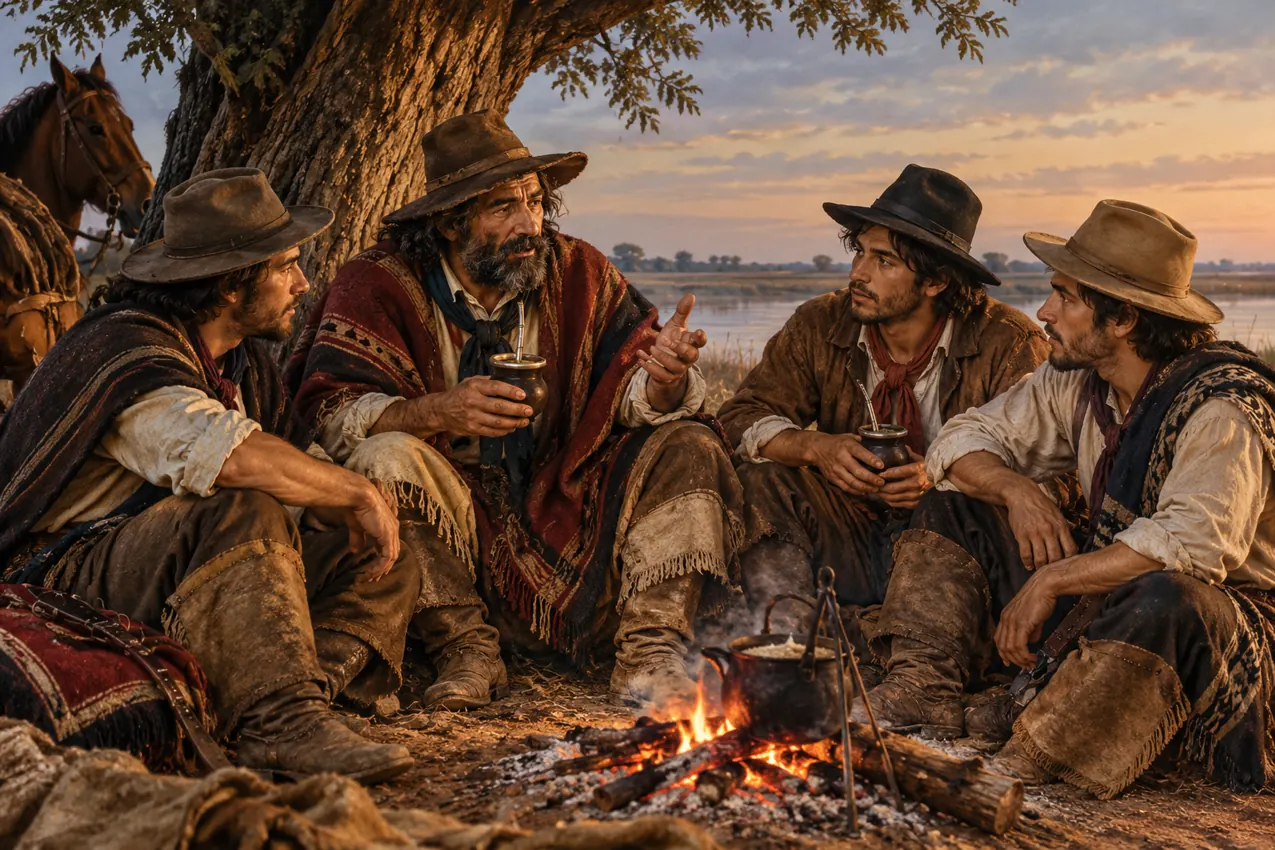
The original verses, Canto XXXII (1879)
These selected stanzas are drawn directly from the site's original Spanish corpus; editorial explanation follows separately.
Estrofa 1145
Yo nunca tuve otra escuelaque una vida desgraciada:no estrañen si en la jugadaalguna vez me equivoco,pues debe saber muy pocoaquel que no aprendió nada.See the stanza in the complete canto
Estrofa 1147
No aprovechan los trabajossi no han de enseñarnos nada;el hombre, de una mirada,todo ha de verlo al momento:el primer conocimientoes conocer cuándo enfada.See the stanza in the complete canto
Estrofa 1157
Nace el hombre con la astuciaque ha de servirle de guía;sin ella sucumbiría:pero, sigún mi esperencia,se vuelve en unos prudenciay en los otros picardía.See the stanza in the complete canto
Reading the poem with care
Learning through hardship is not infallibility
Fierro acknowledges the possibility of error. He does not erase his earlier actions by turning them into lessons. This is a useful distinction when reading a narrator who has been mistreated and has also harmed others.
Knowing when anger begins
His concern with recognizing when someone becomes angry invites attention to self-control and conflict. The line has force because the earlier poem includes encounters in which passions and violence produce irreversible consequences.
Astuteness, prudence and opportunism
The same resourcefulness may become prudence or cunning at another person's expense. The poem does not reduce survival to innocence or villainy; it raises questions about how skills are used.
A contemporary reading
To learn from mistakes is not simply to repeat a moral phrase. It can mean acknowledging injury done to others, accepting responsibility and changing conduct. This application is our commentary, clearly separate from Hernández’s original language.
Original text and reading companions
José Hernández, La vuelta de Martín Fierro (1879), Canto XXXII. The quotations are read from the same repository corpus as the Spanish reader. This article is original English interpretation, not a translation or a claim about Hernández's personal beliefs.
Read the complete original canto · All 31 stanzas with commentary · Literary analysis