FATHERHOOD · FAMILY · WISDOM · ORIGINAL SPANISH VERSES
Los Hermanos Sean Unidos: The Meaning of Martín Fierro’s Famous Advice
Few lines from Martín Fierro are remembered as widely as the call for brothers to stay united. Read in context, this is more than a slogan about togetherness: it is an appeal spoken after painful family separation.
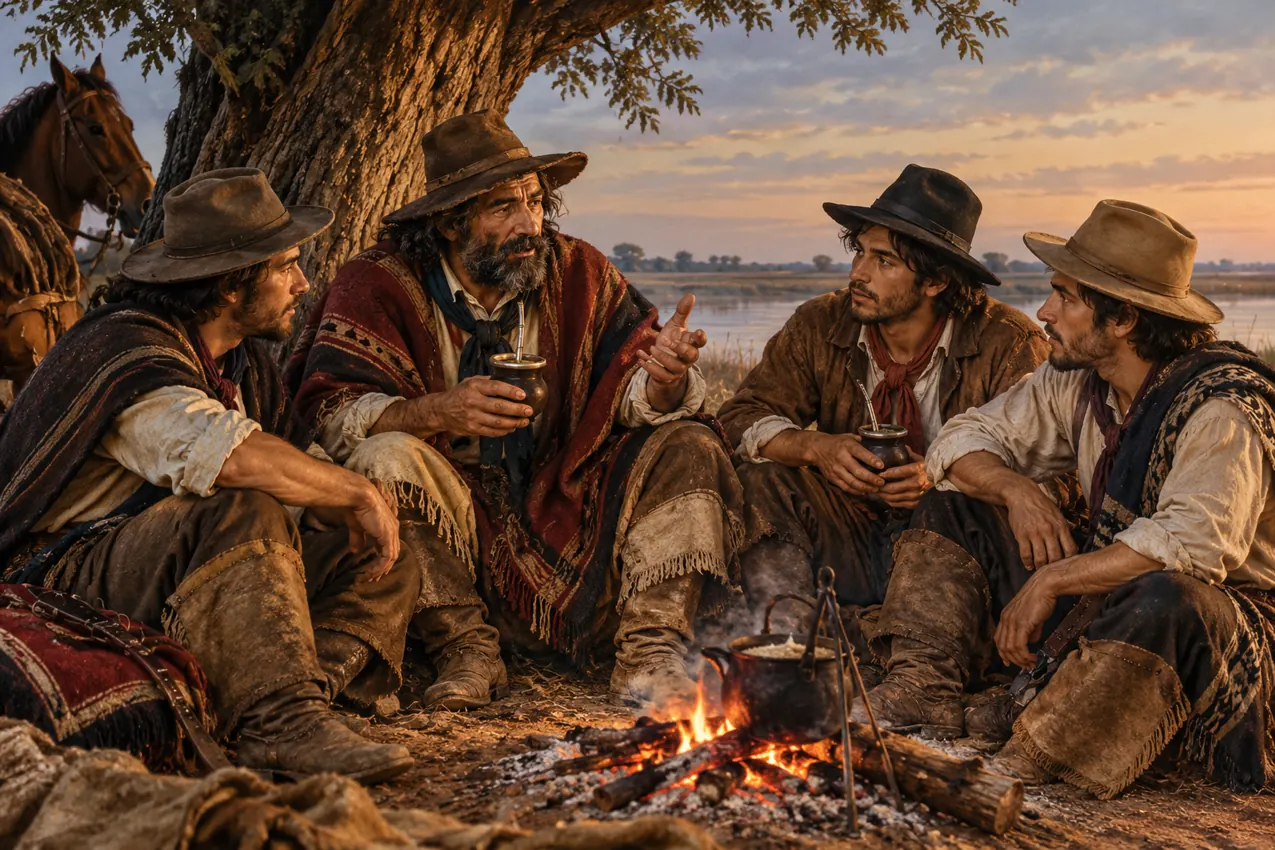
The original verses, Canto XXXII (1879)
These selected stanzas are drawn directly from the site's original Spanish corpus; editorial explanation follows separately.
Estrofa 1159
Muchas cosas pierde el hombreque a veces las vuelve a hallar;pero les debo enseñar,y es gúeno que lo recuerden:si la verguenza se pierde,jamás se vuelve a encontrar.See the stanza in the complete canto
Estrofa 1160
Los hermanos sean unidosporque ésa es la ley primeratengan unión verdaderaen cualquier tiempo que sea,porque, si entre ellos pelean,los devoran los de ajuera.See the stanza in the complete canto
Estrofa 1161
Respeten a los ancianos:el burlarlos no es hazaña;si andan entre gente estrañadeben ser muy precavidos,pues por igual es tenidoquien con malos se acompaña.See the stanza in the complete canto
Reading the poem with care
Why solidarity matters here
Fierro has already told a story of coercion, loss and disconnection from his family. When he calls for his sons to remain together, the stakes are personal. Unity is not merely an abstract national motto; it answers a broken household.
The warning within the stanza
The verse imagines brothers being vulnerable to outsiders if they turn against each other. It is an image of exposure, not an instruction to approve every action by a family member. Solidarity can coexist with honesty and disagreement.
Respect and moral reputation
The neighboring stanzas connect unity with shame, self-respect and regard for elders. Placing the famous lines between other counsels shows how Fierro imagines personal conduct as a network of relationships.
What the line can mean today
Families can read the stanza as a call to support one another in hard times, while also recognizing that healthy unity cannot require silence about harm. That final distinction is a modern ethical interpretation, not an extra verse attributed to the poem.
Original text and reading companions
José Hernández, La vuelta de Martín Fierro (1879), Canto XXXII. The quotations are read from the same repository corpus as the Spanish reader. This article is original English interpretation, not a translation or a claim about Hernández's personal beliefs.
Read the complete original canto · All 31 stanzas with commentary · Literary analysis