ARGENTINE LITERATURE · AN ENGLISH READER’S GUIDE
What Is Martín Fierro? The Story, Meaning, and History of Argentina’s Gaucho Epic
A man sings about losing his home, his freedom, and his place in the world. Through his voice, José Hernández turned the hardships of Argentina’s nineteenth-century countryside into one of the country’s most enduring literary works.
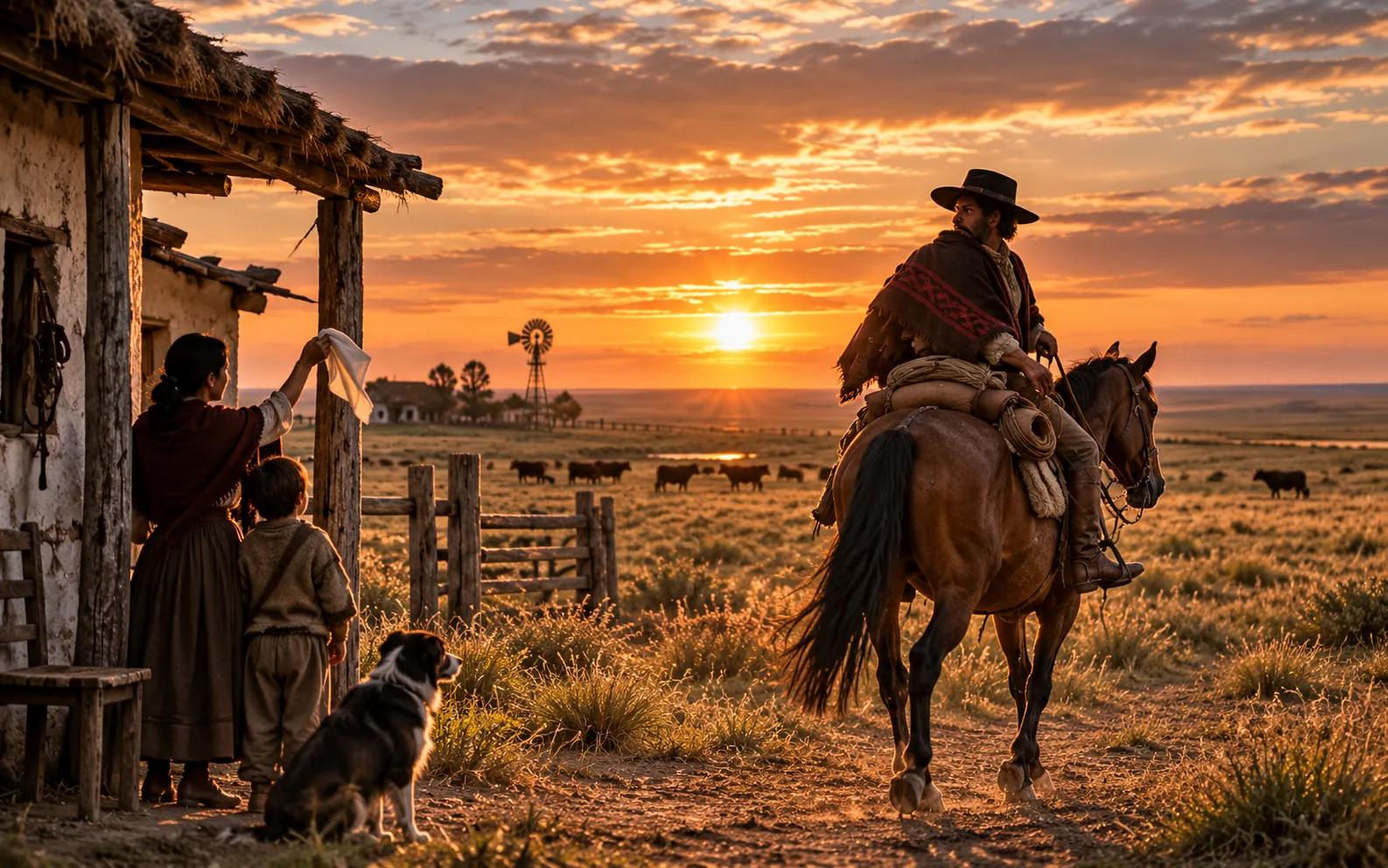
What kind of work is Martín Fierro?
Martín Fierro is a narrative poem written by the Argentine author José Hernández and published in two installments, seven years apart. Its protagonist is a gaucho—a rural horseman associated with the open grasslands of Argentina and neighboring regions—who recounts his experiences in the first person.
For readers unfamiliar with Argentine literature, the poem can sound at first like an adventure told around a campfire. Fierro sings of horses and work, friendship and hostility, loss and endurance. But the apparently simple voice conceals a far more difficult question: what happens when a man’s way of life is treated as expendable by the institutions claiming to govern him?
The term gauchesque refers to a literary tradition that uses the figure and speech of the gaucho as part of its poetic language. It does not mean that the printed poem is an unfiltered recording of what every historical gaucho said or believed. Hernández was a writer making artistic and political choices.
What happens in the story?
Part One: A man driven from his home (1872)
At the beginning of El gaucho Martín Fierro, Fierro remembers a life of rural work and family. That stability falls apart when he is taken for service at a frontier outpost. Military discipline, deprivation, and the injustices he witnesses transform his relationship with the authorities.
When he finally returns, the home he knew is gone. He becomes a fugitive, and the poem follows him through violent encounters and profound isolation. One decisive moment comes when Sergeant Cruz, initially part of the force pursuing him, chooses to stand beside him instead. Their alliance turns the story toward friendship and exile.
Part Two: Return, testimony, and advice (1879)
La vuelta de Martín Fierro shifts its emphasis. The story makes room for accounts from other characters, including Fierro’s sons and the son of Cruz. Their experiences reveal different forms of hardship and survival. The later part also includes the celebrated advice Fierro gives to the younger generation.
The two books are therefore not interchangeable. The first gives forceful expression to dispossession and resistance; the second explores the possibilities, obligations, and compromises of living again among others. Reading them together reveals the poem’s tensions rather than flattening them into a single moral lesson.
The history behind the poem
In nineteenth-century Argentina, rural society was changing as political authorities sought to consolidate control over territory and labor. Frontier military service, recruitment practices, conflicts involving Indigenous peoples, and the unequal treatment of rural workers formed part of the historical landscape in which Hernández wrote.
A fortín was a small military outpost on the frontier. In the poem, the frontier is not a picturesque backdrop; it is a place where the protagonist experiences coercion and loss. The narrative also contains hostile and often prejudiced descriptions of Indigenous people. Those portrayals belong to the historical text and need critical attention, not unexamined repetition as historical fact.
Hernández’s poem cannot serve on its own as a neutral record of nineteenth-century life. It is a powerful literary intervention shaped by its author’s position, language, and era. Archival documents and historical scholarship help readers separate what the narrator says from what can be independently established.
Why does Martín Fierro still matter?
The poem has endured partly because it gives language to an experience that extends beyond its setting: the fear of losing one’s livelihood, the pain of separation from family, and the demand to be treated with dignity. Its sound and form matter, too. Fierro is not merely described by an outside narrator; he makes his case by singing.
Later readers have treated Martín Fierro as a landmark of Argentine cultural identity. Yet an iconic status should not prevent difficult questions. The poem stages violence, prejudice, masculine codes of honor, and clashes between individuals and institutions. Its literary significance lies in these contradictions as much as in any comforting image of the gaucho.
It also helps explain why gaucho culture became so prominent in Argentina’s cultural imagination. The historical gauchos were diverse people with changing occupations and circumstances; the literary gaucho of Hernández is one influential representation, not the whole story.
How should an English-speaking reader begin?
Start with the opening canto of the 1872 poem to hear Fierro introduce himself as a singer. Then follow his account of frontier service before moving to the 1879 sequel. If the vocabulary feels unfamiliar, keep a few terms in mind: gaucho is a rural horseman, payada is a tradition of sung poetic exchange, and pulpería was a rural shop and gathering place.
Our digital reader provides the complete original Spanish poem with navigation by canto and verse. English readers can also consult the historical Walter Owen translation (1935) through the linked external facsimile. We have not imported that translation into the reader, and we do not present a newly improvised English text as Hernández’s original words.
More ways to read Martín Fierro in English
For a detailed summary of both parts, follow the plot, characters and themes in reading order. If you are looking for a text in English, start with our historical English translation guide, including Walter Owen's 1935 edition and source information.
Frequently asked questions
What is Martín Fierro about?
It tells the story of a gaucho drafted into frontier military service, the collapse of his family life, his flight from the authorities, and his later attempt to reconnect with his sons and society.
Who wrote Martín Fierro?
José Hernández (1834–1886), an Argentine writer, journalist, and political figure.
When was Martín Fierro published?
The first part, El gaucho Martín Fierro, appeared in 1872. The sequel, La vuelta de Martín Fierro, followed in 1879.
Is Martín Fierro available in English?
Yes. Walter Owen published a historical English translation in 1935. A digitized copy can be consulted externally; the complete translation is not reproduced in this website’s reader.
Sources and editorial notes
This guide is written for English-speaking readers and distinguishes publication facts from interpretations of the poem. Its account of the plot and historical context is informed by the following institutional sources:
- Biblioteca Virtual Miguel de Cervantes — bibliographic record for the 1872 edition.
- Teatro Nacional Cervantes — literary and narrative overview of both parts.
- Educ.ar — introduction to El gaucho Martín Fierro and its social themes.
- MARTINFIERRO.ORG historical archive (currently in Spanish).
Editorial distinction: The guide contains modern English prose about the work, not a published English translation of the poem. Names of the original Spanish editions are retained.