ENGLISH READER'S LIBRARY · JOSÉ HERNÁNDEZ
Martín Fierro Summary: Plot, Characters, and the Two Parts
What happens in Martín Fierro? José Hernández tells a gaucho's story in two connected poems: first the destruction of his settled life, then the difficult question of how to live after loss. Here is a guide to the plot without confusing the narrator with the author.
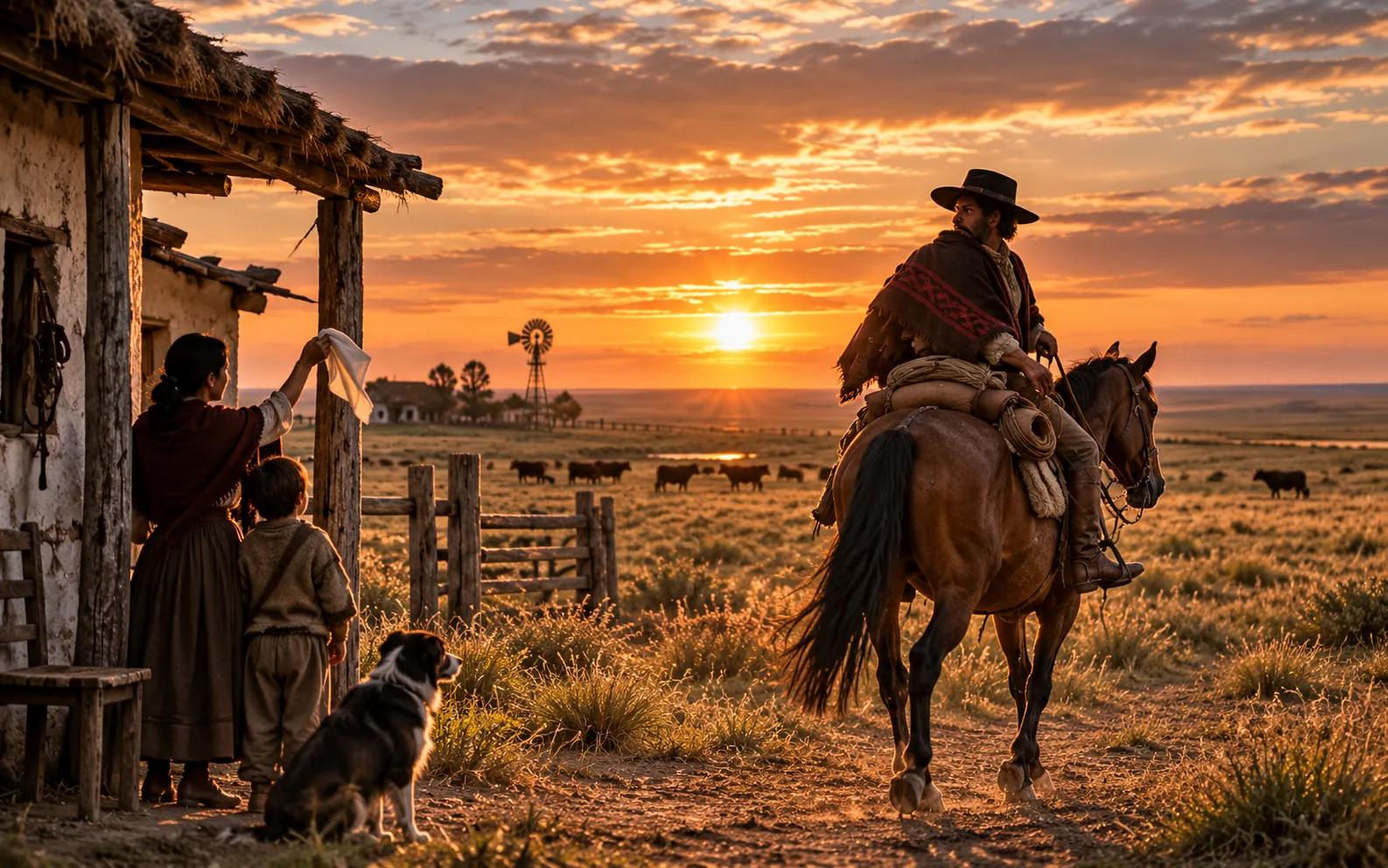
The story in brief
Martín Fierro introduces himself as a singer whose life once revolved around rural work, his wife and his children. Drafted into service at the frontier, he suffers deprivation and mistreatment. When he comes home, he finds that the world he knew has disappeared. He becomes a fugitive, and the poem confronts the violence he encounters and commits.
Sergeant Cruz, sent as part of the force pursuing him, refuses to let Fierro face his attackers alone. Together they leave the world governed by local officials, hoping for another life beyond the frontier.
Part One: El gaucho Martín Fierro (1872)
The first poem sets the conflict in motion: a gaucho is separated from his family and forced to serve at a frontier post. The experience produces a devastating sense of injustice. After returning to find his home lost, he is drawn into confrontations and killings. These actions should not be softened into a simple heroic adventure.
Cruz's decision to join him provides the first part with one of its strongest images of solidarity. The two men depart together, and the story pauses before their later fate is known.
Part Two: La vuelta de Martín Fierro (1879)
In the continuation, Fierro recalls his experiences beyond the frontier, including Cruz's illness and death and his own encounter with a captive woman. Eventually he returns and learns more about his family. His sons tell their own stories of hardship; Picardía, Cruz's son, adds another testimony.
The younger son recounts life under the guardianship of the eccentric Don Vizcacha. A later poetic exchange between Fierro and an Afro-Argentine singer known as the Moreno brings unresolved violence back into view. The poem moves toward advice, parting and the possibility of living within society again.
Who are the main characters?
Martín Fierro is the protagonist and principal narrator, but his statements are not automatically the author's opinions. Cruz embodies friendship and a conflict between orders and conscience. Fierro's sons introduce experiences different from their father's. Don Vizcacha represents a memorable, often cynical set of maxims.
Picardía, the captive woman, the Moreno and other characters expand and challenge the central account. The singer called the Moreno in the second part is not the Afro-descendant man whom Fierro killed earlier. The distinction matters to the poem's treatment of memory and racism.
What are the main themes?
Compulsory service and the abuse of power drive the early action. Loss of home and family transforms the speaker's identity. Friendship, survival and the limits of personal freedom shape his choices; the sequel adds arguments about responsibility, work, justice and how one generation advises the next.
The poem also contains racist language and representations of Indigenous communities that reflect its historical setting and the narrator's prejudices. Readers can recognize its literary significance while examining these features critically.
Where should a new reader begin?
Read the opening canto of the 1872 poem to hear Fierro establish his voice. Follow the account of recruitment and frontier service before moving to the second part. Reading the sequel first removes much of the weight of the losses and choices described there.
Our reader presents the original Spanish text, organized into 46 cantos and 7,210 verses across both parts. For English context, consult our character guide and historical archive; for a historical English translation, see the separate translation guide.
Historical sources and further reading
This guide provides original English explanation, not an English transcription of the poem. Publication history, literary interpretation and modern editorial illustration are distinguished.