THE GAUCHO WORLD · ENGLISH CULTURAL RESEARCH
What Is Yerba Mate? The Drink, the Plant, and Its Cultural History
Mate is both a drink and a social practice. Its history begins long before the modern borders of Argentina, and its familiar gourd and filtered straw make more sense when we look at the plant, its Indigenous history, and the people who share it.
A drink with more than one meaning
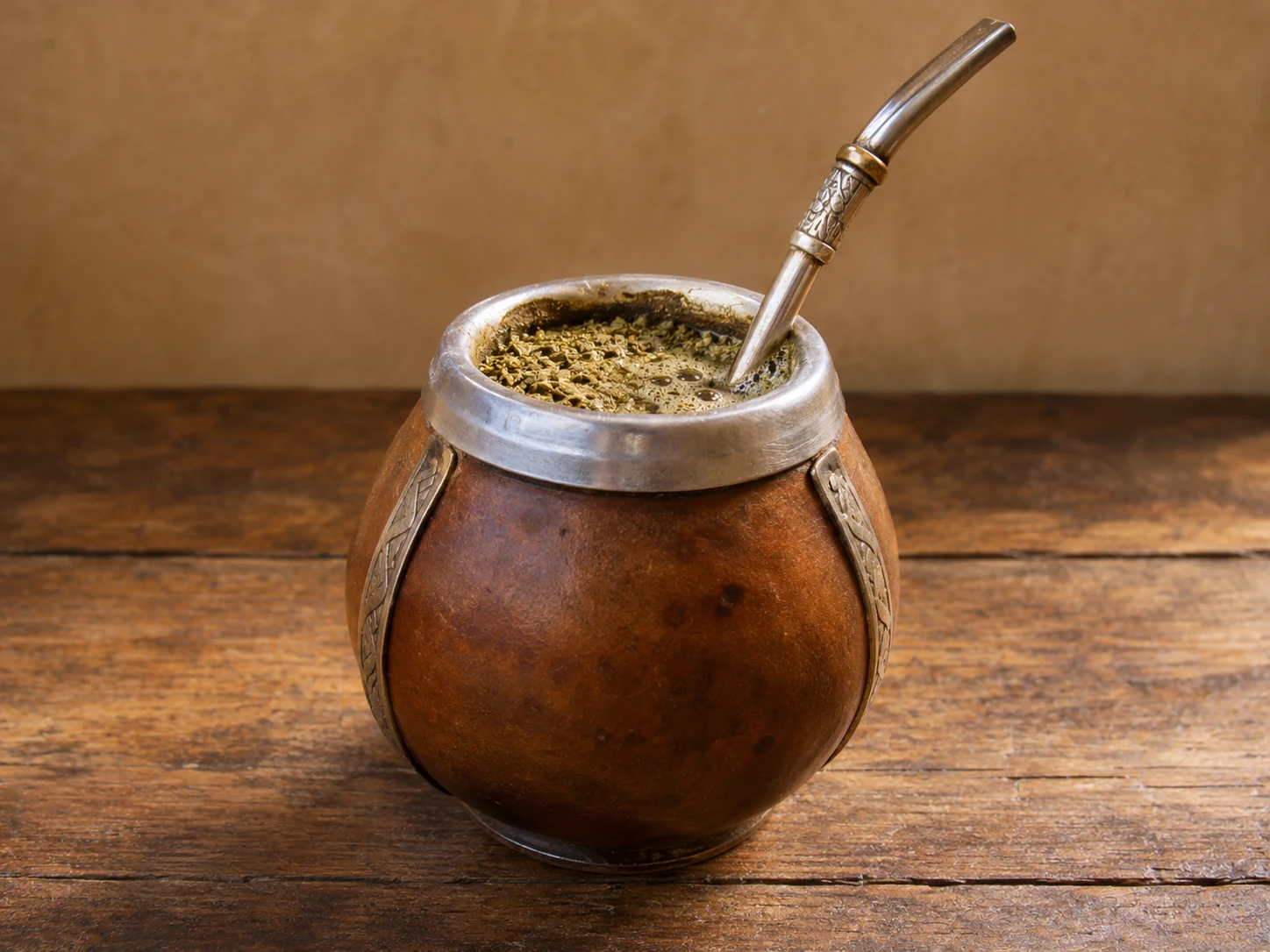
The word mate can refer to an infusion, the vessel used to drink it, or a shared moment of conversation. The infusion is prepared from processed leaves of Ilex paraguariensis, a tree native to southeastern South America. The same plant is not the source of black or green tea, which comes from Camellia sinensis.
Traditional preparation places the dried yerba in a container, adds hot water, and draws the liquid through a filtered straw called a bombilla. The yerba can be infused repeatedly. Practices vary: some people share one vessel, others prefer individual servings; temperature and preparation also change between communities.
Indigenous roots and the Río de la Plata
Knowledge of yerba mate and its use predates Argentina's nationhood and is closely connected with Guaraní peoples. Colonial trade and Jesuit missions later contributed to its wider circulation. Claims that gauchos or a modern state invented mate obscure those earlier histories.
The drink is familiar across Argentina, Uruguay, Paraguay, southern Brazil, and communities elsewhere. Its significance cannot be assigned exclusively to one national identity, even though each place has distinctive customs.
What happens during a round of mate?
The cebador prepares and serves successive infusions. In some gatherings, the same vessel passes from one person to another; elsewhere everyone has their own. What matters culturally is the combination of hospitality, habit and conversation, not a universal set of rules.
A mate gourd and the yerba mate tree are different things. A traditional gourd vessel is made from another plant; the yerba consists of harvested and processed leaves. This distinction is useful for newcomers who see the same word on a plant label and on the drinking vessel.
How it connects to Martín Fierro
Mate belongs to the wider rural world that readers associate with gaucho culture. But a modern image of a gaucho drinking mate should not be mistaken for a precise scene from a particular canto. Studying objects and historical sources gives context to the poem without turning an illustration into documentary proof.
To understand the daily material world of nineteenth-century workers, read mate alongside discussions of horses, rural stores, clothing and outdoor cooking—not as a complete description of any person's life.
Sources and editorial method
These notes expand the research and vocabulary of our Spanish cultural guide for an English-speaking audience. Historical claims, literary representations and modern editorial images are distinguished. External documents remain with their original custodians.
- Argentina's cultural heritage register: Mate
- Argentina.gob.ar: mate and its botanical and Guaraní history
- Royal Botanic Gardens, Kew: Ilex paraguariensis
← Return to the English cultural magazine · An introduction to Martín Fierro