THE GAUCHO WORLD · ENGLISH CULTURAL RESEARCH
Gaucho Traditions Explained: Horses, Asado, Fogones and Rural Life
Horses, a fire at dusk, an asado and stories shared over mate are enduring images of gaucho culture. Behind those images are real tools, diverse histories and traditions that have changed over generations.
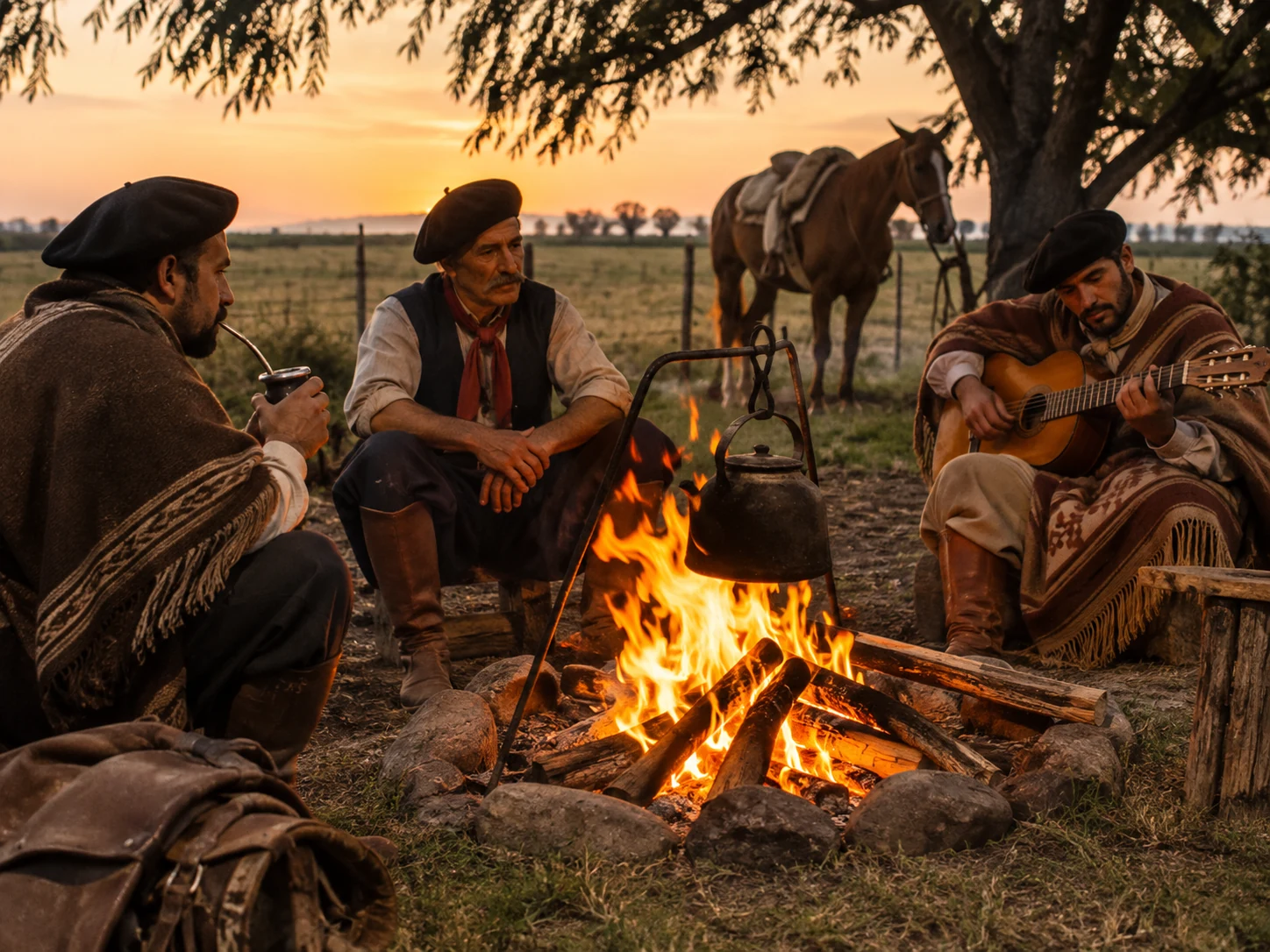
The horse as partner in rural work
Cattle raising across the grasslands made riding and horse-handling important skills. Horses offered mobility between ranches and settlements and were central to roundups, herding and other tasks. The tack and saddle equipment used for work had practical meanings before becoming the subject of traditional displays.
The word pingo is a familiar regional term for a horse. Apero and recado refer to gear used for riding or saddling; their exact meanings can change with local custom. Horse culture was never exclusive to one group or one modern state.
Asado and the shared fire
Asado describes meat cooked over fire or embers and, today, often names the social meal itself. A fogón is a fire used for heating, cooking or gathering. The familiar picture of people talking around flames captures an important social possibility, but it does not follow that every historical outdoor fire involved music and leisure.
A modern barbecue is also not a complete record of the diet of nineteenth-century rural workers. Access to different foods depended on time, place, work and resources.
Pulperías, music and conversation
The rural general store known as a pulpería could concentrate trade, travelers and news in places where settlements were distant. Musicians and payadores form part of the remembered world of the countryside, although they were not present at every gathering.
Culture was made in everyday exchanges as well as in extraordinary performances. Working people, women, Indigenous communities and Afro-descendant residents all formed parts of the Río de la Plata's history, even when later celebrations favored one heroic male figure.
Tradition and historical evidence
Traditional dress, equestrian exhibitions and rural festivals are meaningful present-day practices. They are also acts of remembering and selecting from the past. Objects in museums, dated documents and oral testimonies help explain how those traditions changed.
The two volumes of Martín Fierro show both the attraction and the limits of the literary gaucho: the poem portrays skilled rural life, but also coercion, social conflict and violence. The richest cultural account keeps both in view.
Historical context: what is a gaucho?
Readers exploring gaucho meaning often begin by asking what is a gaucho. The answer involves work, mobility, law, and literature as well as traditions; see our historical introduction to the gaucho for that wider context.
Sources and editorial method
These notes expand the research and vocabulary of our Spanish cultural guide for an English-speaking audience. Historical claims, literary representations and modern editorial images are distinguished. External documents remain with their original custodians.
- Spanish illustrated glossary of the Río de la Plata's rural culture
- Argentina.gob.ar: Gaucho and criollo traditions
- English article: What Is a Gaucho?
- English article: What Was a Pulpería?
← Return to the English cultural magazine · An introduction to Martín Fierro