THE GAUCHO WORLD · ENGLISH CULTURAL RESEARCH
What Did Argentine Gauchos Wear? Ponchos, Chiripás, and Riding Gear
A broad poncho and loose riding clothes are recognizable symbols of the gaucho. But there was never one fixed costume worn by every rural horseman for centuries. Clothing changed with practical needs, region, trade, social status and fashion.
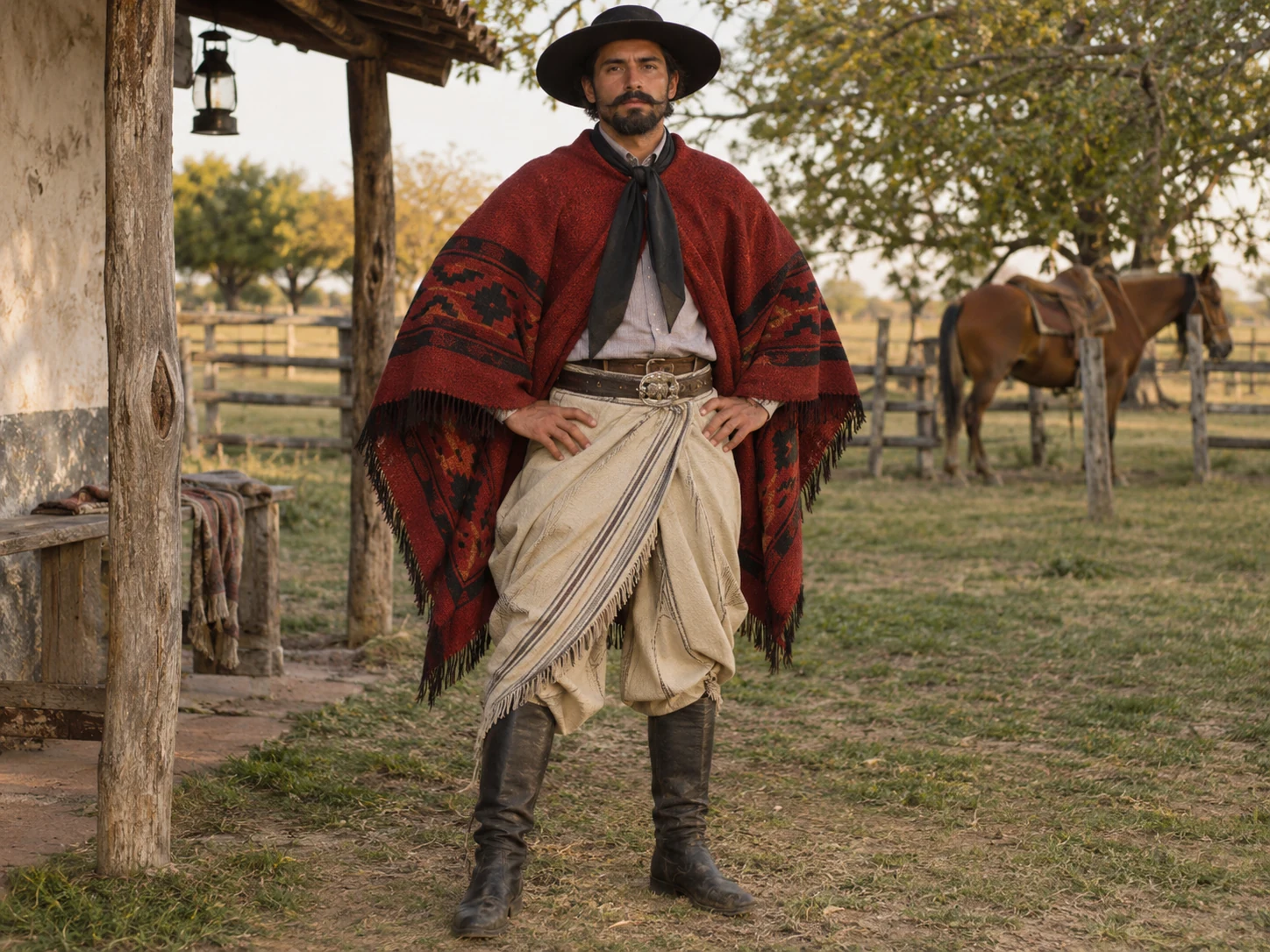
Clothing that changed over time
The figure often presented at festivals—wide-brimmed hat, colorful poncho, loose trousers, boots and knife—compresses different periods into one memorable image. Nineteenth-century workers did not all dress alike, and later traditionalist dress can preserve, adapt or combine older forms.
For historians, a dated photograph or inventory matters more than an undated costume sketch. Even authentic garments need a documented location and period before they can be used to describe a specific rural community.
The poncho and the chiripá
A poncho is a woven outer garment worn for warmth and protection from weather. Ponchos vary in materials, patterns and regional associations, and their history extends far beyond the literary gaucho.
The chiripá is a wrapped garment held at the waist and worn in different ways over other clothing. It appears in historical representations of the Río de la Plata countryside. It should not be casually equated with bombachas, the loose trousers associated with later riding traditions.
Boots, belts, facones and work
Footwear could include boots and other forms of leather covering; belts and riding equipment helped carry the objects needed for work. A facón—a substantial rural knife—could serve practical purposes and could also be used in violence. Literary fights made the knife especially famous, but they do not define the daily behavior of every gaucho.
A horse, saddle gear and an appropriate outfit were part of a working environment. The quality and completeness of those items depended on access to money, materials and employment.
Reading a gaucho image critically
A painting, a modern festival photograph and an archive photograph are different kinds of evidence. The first may be imaginative, the second records a contemporary event, and the third records a past moment—but even a historic photograph can be staged.
Our images are editorial reconstructions, not visual proof of how Martín Fierro dressed. Read the clothing vocabulary as an invitation to examine historical objects and sources, not as a claim of timeless authenticity.
Historical context: what is a gaucho?
The phrase gaucho meaning refers to a historical rural horseman, not simply a clothing style. To understand what is a gaucho before comparing garments across periods, consult our historical guide to gaucho life and culture.
Sources and editorial method
These notes expand the research and vocabulary of our Spanish cultural guide for an English-speaking audience. Historical claims, literary representations and modern editorial images are distinguished. External documents remain with their original custodians.
- MARTINFIERRO.ORG: Spanish illustrated material-culture guide
- Argentina.gob.ar: Gaucho and criollo traditions and museum objects
- MARTINFIERRO.ORG: English history of the Argentine gaucho
← Return to the English cultural magazine · An introduction to Martín Fierro