CULTURAL HISTORY · NOVEMBER 10
Argentina’s Day of Tradition: Why November 10 Matters
Every November 10, Argentina marks the Day of Tradition. The date commemorates the birth of José Hernández, author of Martín Fierro, and offers a chance to explore the country’s many rural and cultural traditions.
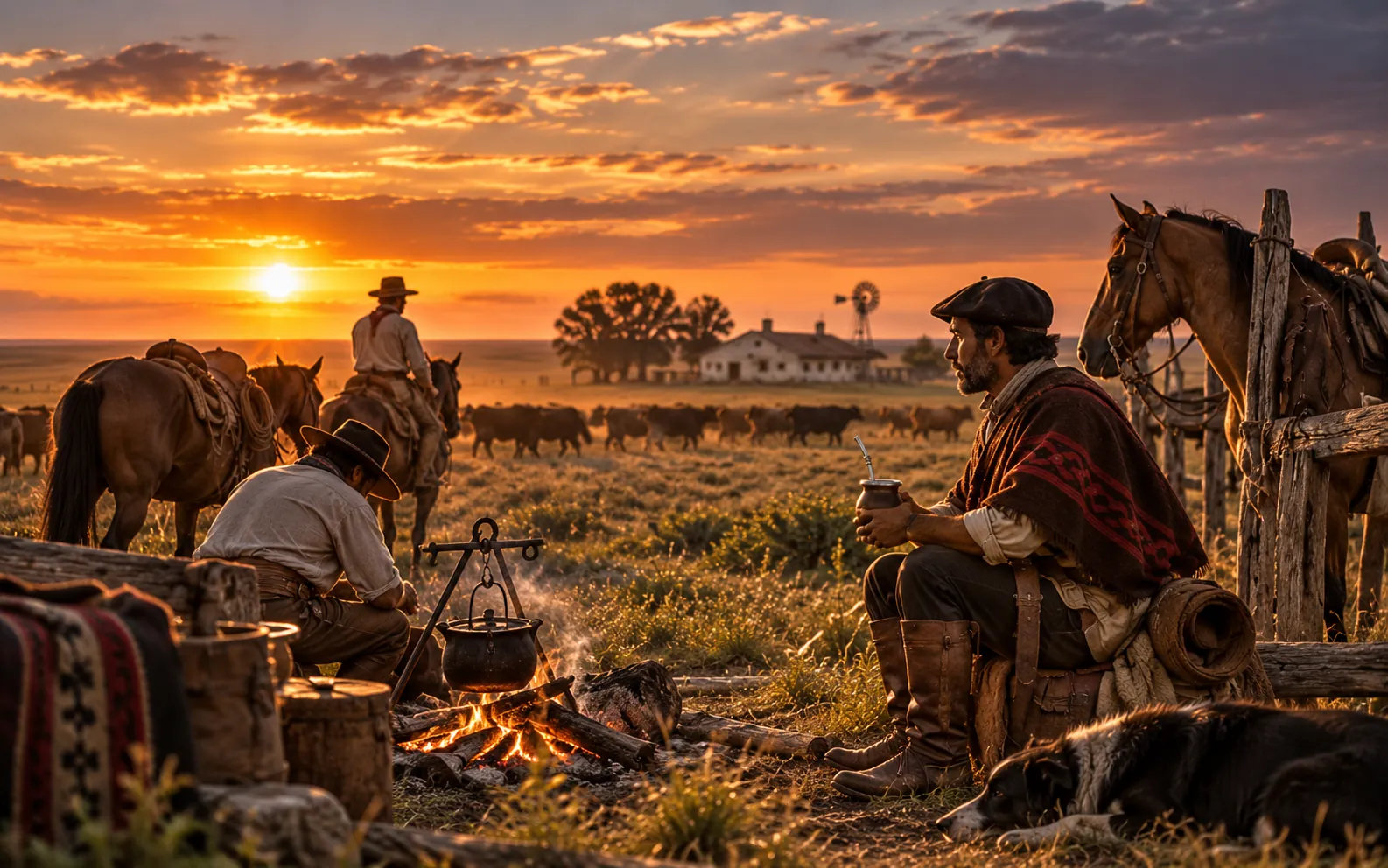
Why November 10?
José Hernández was born on November 10, 1834. Decades later his two-part narrative poem—El gaucho Martín Fierro in 1872 and La vuelta de Martín Fierro in 1879—became an important reference point in debates over Argentine identity.
The Day of Tradition commemorates Hernández’s birthday. It is not the anniversary of the poem’s original publication, an easy distinction to miss when reading short descriptions of the holiday.
1939: a provincial celebration takes legal form
Buenos Aires Province established the Day of Tradition through Law 4756. Its official legislative record states that the law was promulgated on August 18, 1939 and published on September 13 that year.
At that stage it was provincial legislation. It would be historically inaccurate to describe the 1939 law as a nationwide declaration. Its significance lies in how a regional commemoration became part of a broader cultural calendar.
1975: recognition across Argentina
National Law 21,154, enacted on September 30, 1975 and published on October 28, declared November 10 the Day of Tradition throughout the country. The law also designated San Martín in Buenos Aires Province as the City of Tradition because of its connection to Hernández’s birthplace.
The two legislative moments—1939 at provincial level and 1975 nationally—show that even a seemingly timeless holiday has a history of political and institutional decisions.
Whose traditions are remembered?
Celebrations often feature horse skills, folk music, dance, mate, regional foods, textiles and traditional dress. Yet these practices do not all share a single origin, and not all Argentines experience them in the same way.
The histories of Indigenous peoples, Afro-Argentines, women and diverse rural workers matter to the study of national traditions. A celebration of gaucho imagery should not erase people whose lives were also part of the Argentine countryside.
The gaucho in literature before and after Hernández
Gauchesque poetry did not begin with Martín Fierro. Bartolomé Hidalgo, Hilario Ascasubi and Estanislao del Campo were important writers in the tradition. Hernández transformed its possibilities by giving a long narrative to a gaucho who sings about injustice and its consequences.
Later readers and cultural institutions elevated the figure of the gaucho into a national symbol. Looking carefully at the literature helps us see how such symbols were made, debated and reinterpreted.
A meaningful way to mark the day
One way to commemorate the date is to read the opening canto of El gaucho Martín Fierro alongside documents about recruitment, rural work and nineteenth-century society. Another is to listen to payadores or explore regional traditions while documenting who created the materials and when.
Tradition is most interesting when it invites curiosity about the past rather than presenting history as an unchanging costume.
Sources and further reading
This article is original English editorial writing based on documentary and institutional materials. Historical claims and interpretations should be distinguished from poetic scenes and modern reconstructions.