ENGLISH RESEARCH · GAUCHO HISTORY & LITERATURE
Is Martín Fierro Argentina’s National Poem? History and Meaning
Martín Fierro is widely regarded as a defining work of Argentine literature. But calling it a national poem is not the same as proving a timeless official designation: the work's status grew through reading, criticism, education and public debate.
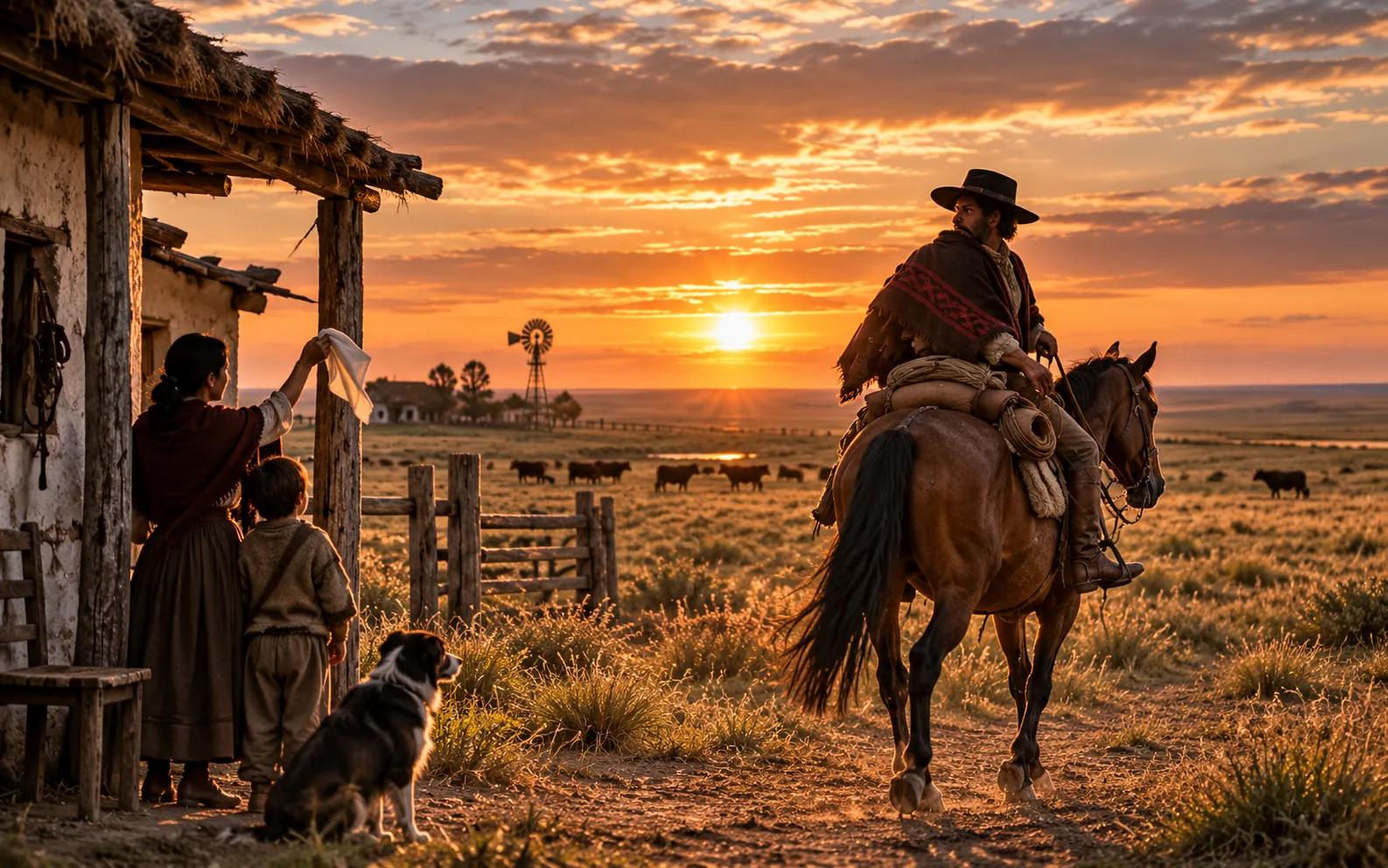
A poem in two parts, not a single patriotic proclamation
José Hernández published El gaucho Martín Fierro in 1872 and its continuation, La vuelta de Martín Fierro, in 1879. The first work gives its singer a powerful complaint about forced military service, loss and the treatment of rural workers. The second expands the story to include family reunion, other voices and advice. Neither volume was originally a government proclamation announcing a national symbol.
What does national poem mean?
Readers often use national poem or national epic to describe the cultural importance of Martín Fierro. Those labels express a history of interpretation and reception. They do not mean that every Argentine views the same character, event or passage in the same way; nor should they be casually described as a specific legal title without identifying such a law.
Why 1913 matters: Leopoldo Lugones and the epic interpretation
In a series of lectures delivered in Buenos Aires in 1913, Leopoldo Lugones argued for the epic stature of Martín Fierro. Contemporary press coverage preserved by Argentina's National Library records his assertion that the poem was epic. These lectures, later associated with El payador, were important in elevating the work to a prestigious place in literary nationalism.
A cultural symbol that can be questioned
Making the gaucho into a representative Argentine figure did not end argument about the poem. The narrator's suffering and complaints invite sympathy, but his violence, racist insults and portrayals of Indigenous peoples complicate any uncomplicated celebration of him as an exemplary hero. Other rural experiences, including those of women and Indigenous and Afro-Argentine communities, cannot be reduced to his voice.
The longer gauchesque literary tradition
Martín Fierro grew out of an established literary genre. Bartolomé Hidalgo, Hilario Ascasubi and Estanislao del Campo were among the major predecessors or contemporaries in gauchesque writing. The Biblioteca Virtual Miguel de Cervantes traces this wider field, while recent scholarship has drawn attention to less studied anonymous works from the 1820s. Hernández's achievement becomes clearer, not smaller, when placed in that history.
How to read the poem as literature and history
Begin with the opening canto and follow the experience of forced service before reading the 1879 continuation. Then ask whose speech is heard, which characters contradict the narrator and how later critics shaped what the poem came to mean. A national literary landmark becomes more interesting when it can be read critically rather than treated as a monument beyond question.
Sources and further reading
This article distinguishes documented historical claims, scholarly interpretation and literary representation. Historical material is linked to the source institution or publication; original Spanish verses have not been modified or republished in translation here.